ENFP and INTJ Conflict: Navigating the Clash of Crusader and Mastermind
The interaction between the ENFP, fondly known as the Crusader, and the INTJ, often dubbed the Mastermind, is a fascinating study in contrasts. These two personality types, while seemingly worlds apart, can form dynamic and enriching relationships. However, their fundamental differences often lead to unique conflict dynamics. ENFPs are known for their spontaneity, creativity, and people-oriented nature, while INTJs are strategic, analytical, and independent thinkers. This page explores how these contrasting characteristics can lead to misunderstandings and conflicts, and offers insights into how these conflicts can be resolved.
In relationships, ENFPs bring enthusiasm and a desire for exploration, often seeking new experiences and connections. They thrive on emotional expression and value interpersonal harmony. On the other hand, INTJs approach life with a focus on logic, efficiency, and long-term planning. They are more reserved emotionally and prefer structure and predictability. These differences can create tension, but they also offer opportunities for growth and mutual understanding. By delving into the conflict dynamics between these two types, this page aims to provide strategies for building stronger, more harmonious relationships.
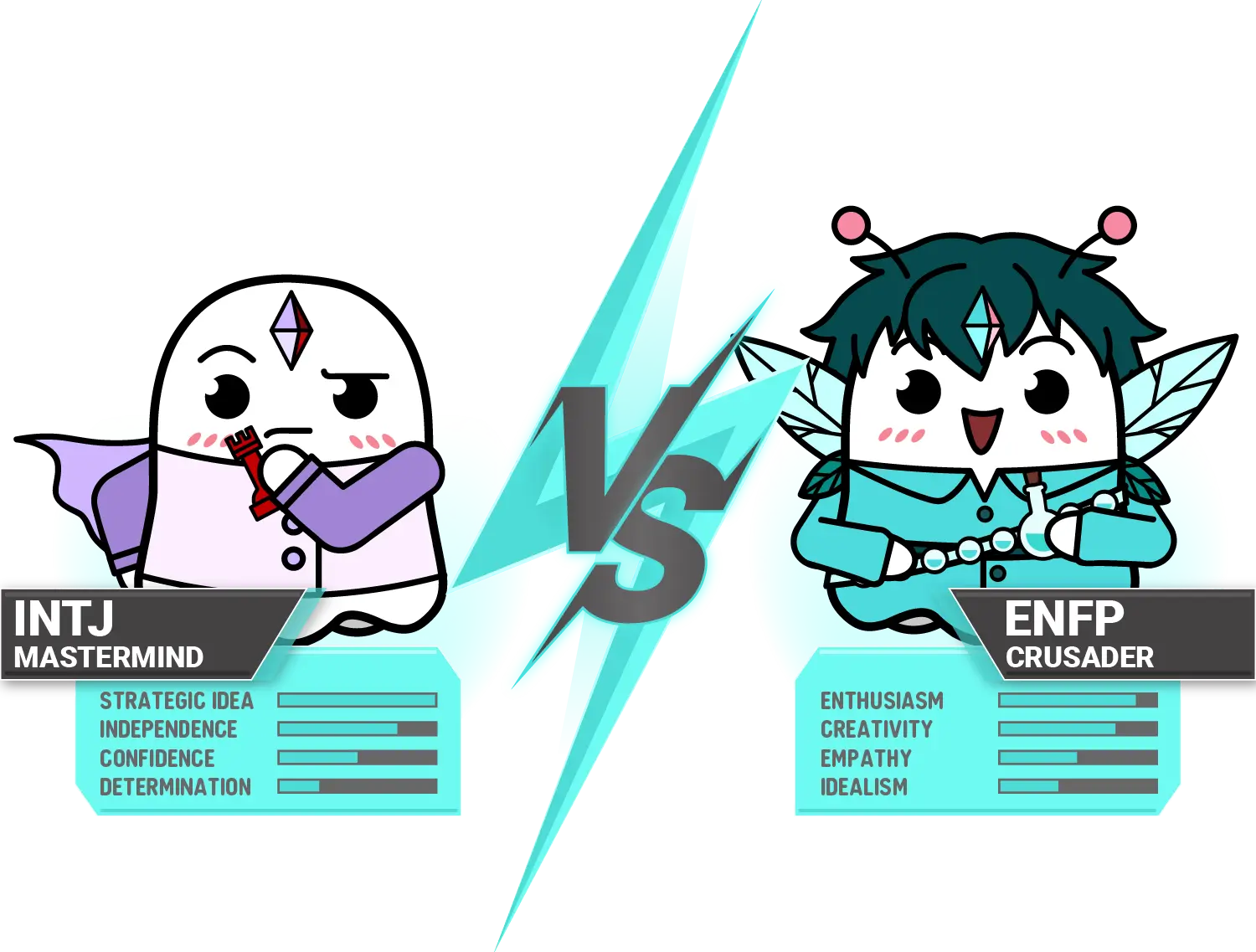
Understanding The Conflict Between ENFP and INTJ
To appreciate the conflict between ENFPs and INTJs, it's essential to understand the fundamental differences that drive their clashes. Here are five key areas where these differences manifest:
-
Approach to Change: ENFPs embrace change and often seek it out, viewing it as an opportunity for growth and new experiences. They thrive in environments that allow for flexibility and spontaneity. In contrast, INTJs prefer stability and predictability, often meticulously planning their steps to achieve long-term goals. This difference can lead to conflicts when ENFPs push for change and INTJs resist, feeling their plans are being disrupted. For example, an ENFP might suggest a spontaneous weekend getaway, while the INTJ might feel anxious about the lack of planning.
-
Communication Style: ENFPs are expressive and often think out loud, sharing their thoughts and feelings freely. They enjoy engaging in lively conversations and exploring ideas collaboratively. INTJs, however, prefer concise, logical communication and may find the ENFP's tangential conversations overwhelming or unfocused. This can lead to misunderstandings, as ENFPs may feel dismissed, while INTJs may feel bombarded by what they perceive as irrelevant information.
-
Emotional Expression: ENFPs are emotionally expressive and value open sharing of feelings as a way to connect deeply with others. They may become frustrated with INTJs, who often keep their emotions private and may not respond with the same level of emotional engagement. This difference can lead to the ENFP feeling unappreciated or ignored, while the INTJ might feel pressured to express emotions they are not comfortable sharing.
-
Decision-Making Process: ENFPs tend to make decisions based on their values and how they feel about the situation, often considering the impact on people involved. INTJs, however, rely on logic and objective analysis, focusing on efficiency and effectiveness. This can create tension when an ENFP prioritizes personal values over logical solutions, leaving the INTJ feeling that decisions are being made irrationally.
-
Conflict Resolution: ENFPs prefer to resolve conflicts through discussion and emotional understanding, seeking harmony and consensus. They may approach conflicts with a desire to explore feelings and find mutual solutions. Conversely, INTJs approach conflict resolution analytically, focusing on finding logical solutions and often preferring to resolve issues independently. This can result in the ENFP feeling their emotional needs are unmet, while the INTJ may feel overwhelmed by the emotional intensity.
Miscommunication and Misunderstanding Between ENFP and INTJ
Miscommunications between ENFPs and INTJs often arise from their differing communication styles and priorities. Here are five common areas where misunderstandings occur:
Different priorities in conversations
ENFPs often prioritize emotional connection and exploration of ideas in conversations, while INTJs focus on exchanging information and problem-solving. This can lead to the ENFP feeling dismissed when the INTJ steers the conversation towards practical matters, while the INTJ may feel frustrated by the ENFP's seemingly aimless discussions.
Varied interpretations of silence
ENFPs may interpret silence as disinterest or disengagement, leading to feelings of insecurity. INTJs, however, often use silence as a tool for reflection and processing information. This misunderstanding can cause the ENFP to become anxious, while the INTJ may feel pressured to fill the silence with unnecessary dialogue.
Discrepancies in emotional expression
ENFPs express emotions openly and expect reciprocal emotional engagement. INTJs, who are more reserved, may not match this level of expressiveness, leading to the ENFP feeling unappreciated or ignored. This can create a cycle of frustration, where the ENFP seeks more emotional validation, further overwhelming the INTJ.
Differing responses to conflict
In conflict situations, ENFPs seek emotional understanding and resolution through dialogue, while INTJs prefer to analyze the problem and find a logical solution. This can result in the ENFP feeling that their emotional concerns are being overlooked, while the INTJ may feel that the conflict is being unnecessarily prolonged.
Misalignment in social needs
ENFPs are social and thrive on interaction, often seeking out group activities and social gatherings. INTJs, however, prefer solitude and may find too much social interaction draining. This can lead to misunderstandings, with the ENFP feeling rejected and the INTJ feeling overwhelmed by social demands.
Emotional Triggers In ENFP and INTJ Conflicts
Understanding emotional triggers is key to managing conflicts between ENFPs and INTJs. Here are some triggers for each type and how to manage them:
ENFP emotional triggers
-
Feeling dismissed or ignored: ENFPs can be triggered when they perceive that their ideas or emotions are not being valued. To manage this, INTJs can make an effort to acknowledge the ENFP's contributions and engage in active listening.
-
Lack of emotional reciprocity: ENFPs may feel triggered when their emotional expressions are not reciprocated. INTJs can help manage this by being more open about their feelings and providing reassurance, even if it doesn't come naturally.
-
Perceived rigidity: ENFPs may become frustrated by the INTJ's preference for structure and routine. To manage this, INTJs can be more flexible and open to spontaneous activities, showing willingness to adapt.
INTJ emotional triggers
-
Emotional overwhelm: INTJs can feel overwhelmed by the ENFP's emotional intensity. ENFPs can help manage this by respecting the INTJ's need for space and not pushing for immediate emotional responses.
-
Perceived illogical decisions: INTJs may be triggered by decisions that seem based on emotion rather than logic. ENFPs can manage this by explaining the rationale behind their decisions and showing how they align with shared goals.
-
Disruption of plans: INTJs may become anxious when their plans are disrupted by the ENFP's spontaneity. To manage this, ENFPs can communicate changes in advance and involve the INTJ in planning new activities.
Strategies For Resolving ENFP and INTJ Conflicts
Finding common ground between ENFPs and INTJs requires understanding and compromise. Here are some strategies to facilitate resolution:
Encourage open communication
Both types should strive for open and honest communication. ENFPs can practice being more concise and focused in their communication, while INTJs can work on being more expressive and emotionally present. This mutual effort can bridge the communication gap and foster understanding.
Establish shared goals
Creating shared goals can align the ENFP's enthusiasm with the INTJ's strategic planning. By focusing on common objectives, both types can find a sense of purpose and direction in their relationship, reducing conflicts over differing priorities.
Balance social and solitary time
Compromise on social activities can help balance the ENFP's need for interaction with the INTJ's preference for solitude. Planning regular social outings that both enjoy, as well as allowing time for individual pursuits, can satisfy both needs.
Practice empathy and patience
Both ENFPs and INTJs can benefit from practicing empathy and patience. ENFPs can try to understand the INTJ's need for structure, while INTJs can appreciate the ENFP's emotional expressiveness. This mutual understanding can reduce misunderstandings and enhance connection.
Seek professional guidance
Sometimes, conflicts may require professional intervention. Couples therapy or personality coaching can provide valuable insights and tools for managing differences, helping both types to navigate conflicts more effectively and build a stronger relationship.
FAQs
How can ENFPs and INTJs improve their communication?
ENFPs and INTJs can improve communication by understanding each other's communication styles and making an effort to adapt. ENFPs can focus on being more concise, while INTJs can work on expressing themselves more openly.
What are common challenges ENFPs and INTJs face in relationships?
Common challenges include differences in emotional expression, decision-making processes, and social needs. These differences can lead to misunderstandings and require both types to practice empathy and compromise.
Can ENFPs and INTJs have successful long-term relationships?
Yes, ENFPs and INTJs can have successful long-term relationships by appreciating each other's strengths and working through their differences. Understanding and compromise are key to building a harmonious relationship.
How do ENFPs and INTJs handle stress differently?
ENFPs often seek social support and express their emotions when stressed, while INTJs prefer solitude and logical problem-solving. Recognizing these differences can help both types support each other during stressful times.
What role does personality type play in conflict resolution?
Personality type influences how individuals approach conflict resolution, with ENFPs favoring emotional understanding and INTJs preferring logical solutions. Understanding these tendencies can help both types find effective ways to resolve conflicts.
Conclusion
The conflict dynamics between ENFPs and INTJs, while challenging, offer opportunities for growth and deeper understanding. By recognizing and respecting their differences, these two types can learn to complement each other, creating a balanced and fulfilling relationship. Through open communication, empathy, and strategic compromise, ENFPs and INTJs can navigate their conflicts and build a partnership that celebrates their unique strengths. Ultimately, embracing their differences can lead to a richer, more harmonious connection, reminding us that diversity in relationships can be a powerful catalyst for personal and relational growth.
Balancing inspiration and strategy? Find out more in the ENFP Conflict Chart and the INTJ Conflict Chart.
MEET NEW PEOPLE
50,000,000+
DOWNLOADS
Universes
Personalities
Meet New People
50,000,000+
DOWNLOADS