INFP and ESTJ Conflict: Navigating Differences Between Dreamers and Executives
When it comes to relationships, understanding the dynamics between different personality types can make all the difference. INFPs and ESTJs often find themselves at odds due to their fundamentally different approaches to life. INFPs are introspective, idealistic, and value-driven, whereas ESTJs are pragmatic, organized, and value efficiency. This page aims to explore the unique conflict dynamics that arise between these two contrasting personality types, offering insights and strategies for better understanding and resolution.
INFPs are known for their deep sense of empathy, creativity, and a strong desire for authenticity. They seek meaningful connections and are often guided by their inner values. On the other hand, ESTJs are characterized by their leadership qualities, decisiveness, and a strong sense of duty. They thrive in structured environments and are driven by logic and practicality. These differences can lead to misunderstandings and conflicts, but they also provide opportunities for growth and learning.
By delving into the common areas of conflict, miscommunication, and emotional triggers, this page aims to help INFPs and ESTJs navigate their differences and find common ground. Whether you're an INFP trying to understand your ESTJ partner or an ESTJ looking to connect better with an INFP friend, this page will provide valuable insights and practical advice.
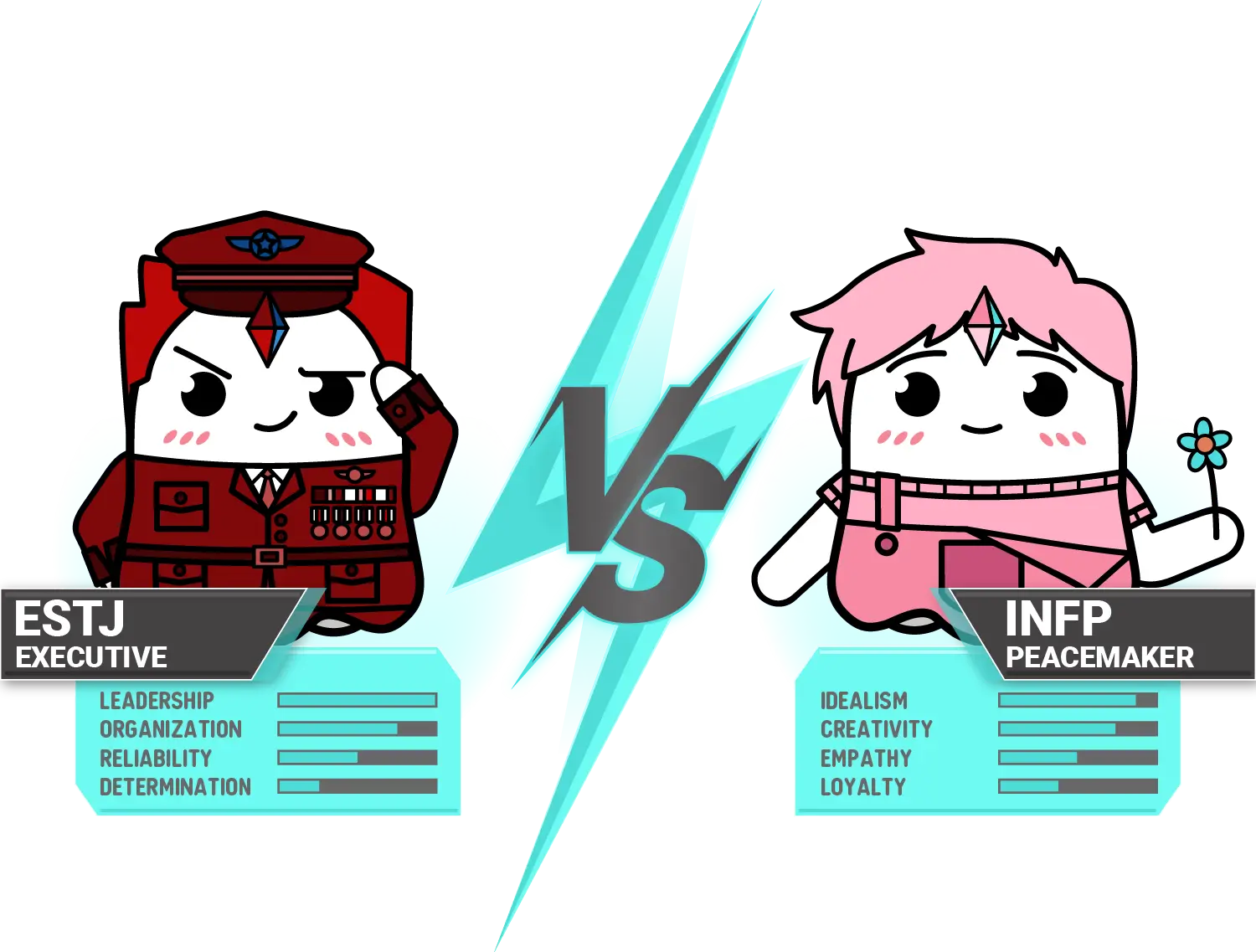
Understanding The Conflict Dynamics Between INFPs and ESTJs
To understand the conflict dynamics between INFPs and ESTJs, it's essential to recognize the fundamental differences that drive these clashes:
- Decision-Making Styles: INFPs make decisions based on their values and emotions, while ESTJs rely on logic and practicality. For example, an INFP might choose a career path that aligns with their passion, whereas an ESTJ might prioritize job stability and financial security.
- Communication Preferences: INFPs prefer open-ended, exploratory conversations, while ESTJs favor direct and concise communication. This can lead to frustration when an INFP feels unheard or when an ESTJ finds the conversation unproductive.
- Approach to Conflict: INFPs tend to avoid conflict and seek harmony, while ESTJs confront issues head-on and seek resolution through debate. This can result in the INFP feeling overwhelmed and the ESTJ feeling like their concerns are being ignored.
- Lifestyle Choices: INFPs often prefer a flexible and spontaneous lifestyle, whereas ESTJs thrive in structured and organized environments. This can lead to disagreements over daily routines and long-term planning.
- Emotional Expression: INFPs are highly sensitive and expressive about their feelings, while ESTJs may struggle to understand and validate these emotions. This can cause the INFP to feel misunderstood and the ESTJ to feel frustrated by the perceived emotional intensity.
Common Areas Of Miscommunication Between INFPs and ESTJs
Miscommunication is a common issue between INFPs and ESTJs due to their different communication styles and priorities. Here are some common areas where misunderstandings arise:
Different communication styles
INFPs often use metaphorical and abstract language, which can confuse the straightforward ESTJ. For instance, an INFP might describe their feelings in poetic terms, leaving the ESTJ puzzled about the actual issue.
Misaligned priorities
An INFP might prioritize personal values and emotional well-being, while an ESTJ focuses on efficiency and practicality. This can lead to conflicts when making decisions, such as planning a vacation where the INFP wants a meaningful experience and the ESTJ wants a well-organized trip.
Conflict avoidance vs. confrontation
INFPs tend to avoid conflict, preferring to keep the peace, whereas ESTJs confront issues directly. This can result in the INFP feeling pressured and the ESTJ feeling like their concerns are not being addressed.
Emotional expression and understanding
INFPs are deeply in touch with their emotions and expect their feelings to be acknowledged. ESTJs, on the other hand, may find it challenging to understand and validate these emotions, leading to feelings of neglect and frustration.
Decision-making processes
INFPs rely on their intuition and values to make decisions, while ESTJs depend on logic and facts. This difference can cause disagreements, such as when an INFP wants to pursue a passion project and the ESTJ questions its practicality.
Emotional Triggers and How To Manage Them
Understanding the emotional triggers for both INFPs and ESTJs can help in managing conflicts effectively. Here’s a closer look at what triggers each type and how to handle it:
INFP emotional triggers
- Feeling misunderstood: INFPs are deeply affected when their thoughts and feelings are not acknowledged. To manage this, ESTJs should practice active listening and show empathy.
- Lack of authenticity: INFPs value authenticity and feel hurt when they perceive others as insincere. ESTJs can help by being genuine and transparent in their interactions.
- Criticism: INFPs are sensitive to criticism, especially when it feels personal. ESTJs should offer constructive feedback in a supportive and non-confrontational manner.
ESTJ emotional triggers
- Inefficiency: ESTJs are frustrated by disorganization and inefficiency. INFPs can help by respecting schedules and being more organized in their approach.
- Lack of respect for authority: ESTJs value hierarchy and can be triggered when their authority is challenged. INFPs should acknowledge the ESTJ's leadership role and communicate respectfully.
- Emotional outbursts: ESTJs may feel overwhelmed by intense emotional displays. INFPs can manage this by expressing their feelings calmly and clearly.
Strategies For Resolving Conflicts Between INFPs and ESTJs
To navigate their differences and find common ground, INFPs and ESTJs can adopt the following strategies:
Practice active listening
Both types should make an effort to listen actively and empathetically. For example, an ESTJ can pause their logical analysis to understand the INFP's emotional perspective, while the INFP can focus on the ESTJ's practical concerns.
Find common goals
Identifying shared objectives can help bridge the gap between INFPs and ESTJs. For instance, both types can work together to plan a project that combines the INFP's creativity with the ESTJ's organizational skills.
Establish clear communication
Clear and respectful communication is key. INFPs should strive to be more direct, while ESTJs should practice patience and avoid interrupting. This can help prevent misunderstandings and foster mutual respect.
Respect differences
Both types should acknowledge and respect their differences. For example, an INFP can appreciate the ESTJ's efficiency, while the ESTJ can value the INFP's empathy and creativity.
Seek compromise
Finding a middle ground is crucial for resolving conflicts. For instance, an INFP and ESTJ can compromise by balancing spontaneity with structure in their daily routines, ensuring both feel comfortable and valued.
FAQs
How can INFPs and ESTJs improve their communication?
INFPs and ESTJs can improve communication by practicing active listening, being clear and direct, and showing empathy towards each other's perspectives.
What are the common sources of conflict between INFPs and ESTJs?
Common sources of conflict include differences in decision-making styles, communication preferences, approach to conflict, lifestyle choices, and emotional expression.
How can INFPs and ESTJs find common ground?
They can find common ground by identifying shared goals, respecting each other's differences, and seeking compromise in their interactions.
What are some effective conflict resolution strategies for INFPs and ESTJs?
Effective strategies include practicing active listening, establishing clear communication, respecting differences, finding common goals, and seeking compromise.
How do INFPs and ESTJs handle stress differently?
INFPs often withdraw and seek solitude to process their emotions, while ESTJs may become more controlling and seek to impose order. Understanding these differences can help in providing appropriate support.
Conclusion
Navigating the conflict between INFPs and ESTJs can be challenging, but it also offers opportunities for growth and deeper understanding. By recognizing and respecting their differences, practicing clear and empathetic communication, and finding common ground, INFPs and ESTJs can build stronger, more harmonious relationships. Embracing these strategies not only helps in resolving conflicts but also enriches the connection between the Dreamers and the Executives, fostering a more balanced and fulfilling partnership.
Missing an essential insight? See how these personalities interact in the INFP Conflict Chart and the ESTJ Conflict Chart.
MEET NEW PEOPLE
50,000,000+
DOWNLOADS
Universes
Personalities
Meet New People
50,000,000+
DOWNLOADS