Posted Friday, February 27, 2026
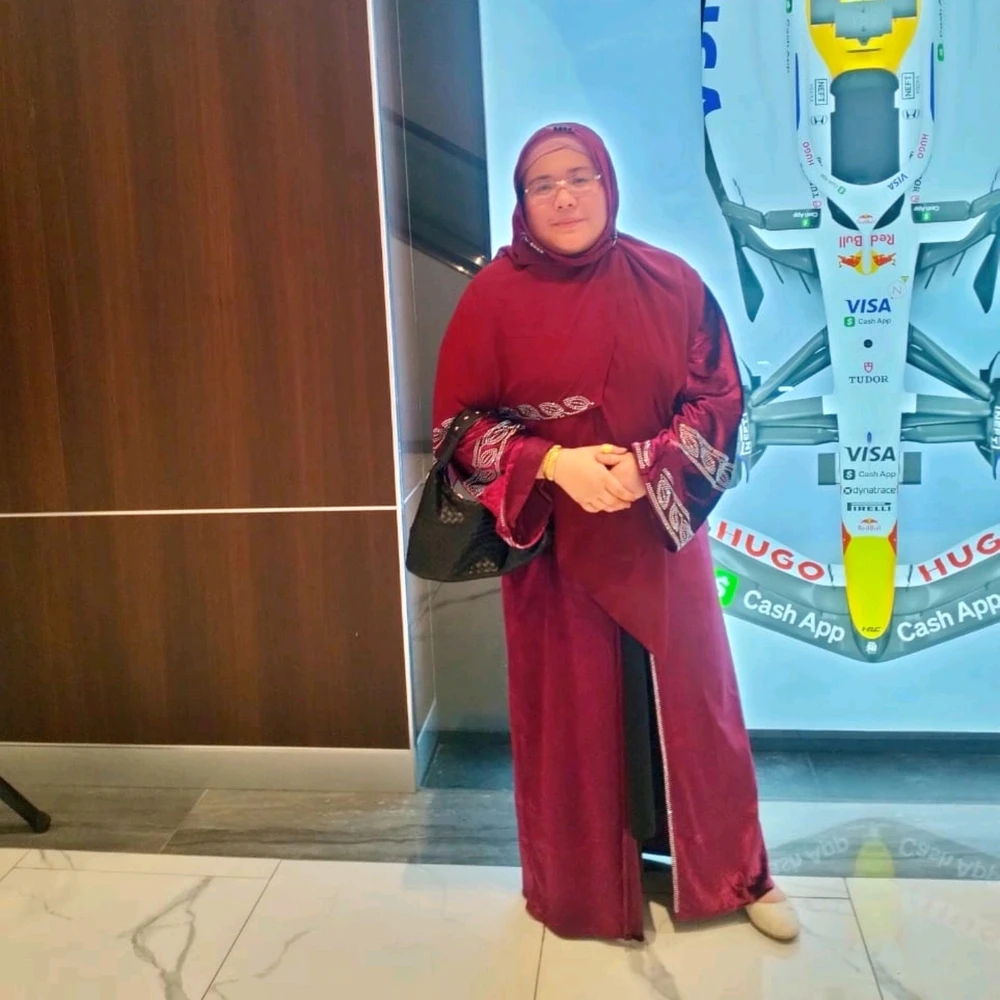
7moI'm Khadijah who grew up in Manila, Philippines
In the end, the lives I live between pages are as real as any I have ever known. They are filled with sun, rain, spice, and salt; with laughter and sorrow, wisdom and folly. They are alive in me, and through me, they may touch the lives of others. Writing is the art of living beyond limits, the act of capturing the ineffable, the gift of tracing infinity with a single hand. And in that gift, I find the purest joy, the deepest wonder, and the endless horizon of my journey as an author. I grew up surrounded by books, computers, video games, television, and traveling. I'm the author of three books. In the year 2000, at three years old, I already knew the route to the clubhouse, the swimming pools, and the basketball courts inside our condominium project in Taguig, Metro Manila. Every day, my mother would slip a crisp one-hundred–peso bill into the pocket of my jeans, folded neatly where a handkerchief should have been, as if to keep me company on my small expeditions. I would waltz toward the food stalls near the clubhouse, repurposed container vans and prefabricated units painted in faded whites and blues, where I bought assorted snacks that belonged to that era, the kind you rarely see anymore. The scent of fried treats mingled with the sharp tang of disinfectant from the nearby pool, and the chatter of other children rose and fell like waves along the cement paths. We had neighbors with children our age, and one of them owned a billiards place. Computer shops were already part of the landscape, the kind where you rented a desktop by the hour to play Counter-Strike, Ragnarök, and other PC games on Windows XP. DVD and VHS rental stores were close enough to walk to, their shelves stacked with stories waiting to be borrowed, holding promises of worlds beyond our own. My father owned a mobile phone that looked like a pocket-sized laptop, heavy and serious, its weight a reminder of the future quietly approaching. Some years later, my mother took me to the mall to get my first postpaid plan with Sun Cellular and to open my first savings account with BDO, small rituals that gently introduced me to the adult world, a world measured in numbers, contracts, and quiet responsibilities. At three, I kept asking my mother to teach me how to read and write. She handed me a pad of paper and taught me the alphabet, then my name, then cursive. Her handwriting flowed like water over smooth stones, every loop and curve deliberate and alive. Years later, I would encode documents for her because her eyesight struggled in front of a computer screen. Her handwriting remained with me, a language of its own, one I learned through repetition, closeness, and patience. My first brush with entrepreneurship came later, in the simplest way. I colored my mother’s hair using a hair dye she bought from the pharmacy. In return, I was allowed to play computer games and browse the internet for hours, exploring small universes behind glass screens. It felt like a fair exchange. I grew up surrounded by books, music, movies, and video game consoles like the PlayStation 1, all while watching my mother run her businesses with quiet authority. Eventually, she bought a house in an exclusive village in Quezon City, a property that has been ours for decades now. Quezon City was where I grew up. Quezon City is a part of Manila, the National Capital Region of the Philippines. Manila is a city bustling with contradictions, and yet in its contradictions, it is miraculous. It is a city that will wear you down and lift you up at the same time. The heat of the sun on your shoulders. The sharp tang of diesel and gasoline in the air. The wet, earthy scent after rain. The city is a thousand small miracles layered upon one another if you stop long enough to breathe it in. The glint of light on puddles and metal. Life in Manila is miraculous not because it is easy, serene, or polished, but because it exists at all, persistently, in full force, in all its chaos, noise, and beauty. Life in Manila astonishes because it persists like water shaping stone, in the laughter of children, the careful handling of goods, the patience of commuters, the aroma of food, and the glint of sunlight on puddles. A mother handing a snack to a child she does not know, a vendor carefully counting coins, a man cleaning a church step with deliberate patience: all ordinary moments, yet extraordinary when seen together. Morning sun glints off rusted metal, puddles, and peeling paint, turning ordinary objects gold. Afternoon sun strikes streets in harsh, clear angles, revealing every crack and imperfection in concrete and stone. You taste the salt of Manila Bay on the wind. You smell cooking, wet soil, flowers, diesel. You hear children laughing, vendors shouting, vehicles clanging. I have walked its streets since I was old enough to notice the way sunlight catches on weathered concrete, the way smoke from street food stalls rises like slow spirits into the afternoon sky, the way jeepneys rattle by, carrying stories, dreams, and voices layered atop one another like the crates of guava, papaya, and mango stack precariously in Divisoria, colors so bright they almost linger. The scent of wet soil mixes with the smoke of grilled longganisa and sweet bananas, curling into alleyways where children chase one another between stalls. Streetlights flicker on, casting halos over uneven sidewalks, highlighting peeling paint and the uneven edges of curbs. The smell of fried fish and garlic-heavy adobo drifts through alleys, mixing with exhaust and the faint sweetness of sampaguita garlands hung in small shrines. Walking through Manila, the past lingers in every corner, often unexpected, sometimes almost hidden. Crumbling Art Deco facades lean precariously over narrow streets, their geometric patterns and stylized flourishes cracked and worn by decades of sun, rain, and wind. Faded ochre and muted turquoise paint peels in curling layers, revealing the coarse concrete beneath. Tangled electric wires droop like lazy vines across balconies, brushing against rusted railings where potted plants cling desperately to life. An old theater hides in plain sight, its high ceilings and carved Philippine flora catching stray beams of sunlight that spill through broken windows. Dust motes float in the air, illuminated like tiny sparks, and the walls seem to murmur stories of gala nights, orchestra music, and velvet curtains long vanished. Traffic in Metro Manila is a character unto itself. Vendors climb in and out of moving jeepneys, balancing boxes of bananas on their heads, hawking cigarettes or chewing gum, a chorus of labor that refuses to bow to exhaustion. Jeepneys rattle along cracked asphalt, their colors faded but proud: pink, blue, yellow, decorated with slogans and faces while metal bodies are chipped and painted in bright colors, their horns loud, urgent, communicating everything at once. Jeepneys push through murky currents when it’s raining, tires churning water that smells of earth and gasoline. In EDSA or Taft Avenue, you are trapped and free at the same time, hemmed in by honking cars, rumbling buses, and a plethora of other vehicles, yet lifted by the sight of resilience everywhere. Motorcycles dart between buses and cars, riders alert to every opening. The city teaches patience, improvisation, and gratitude: not in lectures, but in lived experience. Crossing a street is a negotiation with fate, with luck, with strangers who might stop or might not, and yet somehow, the other side always comes into view. I have stood in Quiapo at noon and the afternoon, the air heavy with negotiations and the scent of fresh fish, watching vendors set out crates of mangoes and wares, their hands deft, movements almost ceremonial. Neighbors sweep sidewalks with brooms frayed at the edges, moving at pacing learned over decades. Stray dogs dodge tires. Manila insists on being alive, on being felt, seen, and remembered. It is a city that wears you down and lifts you up at the same time, and in that tension, in that pulse, you finally understand: life itself, in all its persistence and beauty, is miraculous. Even in quieter neighborhoods, life pulses. In small alleys, you see it in the way an old man mends shoes with thread worn thin, the way a woman folds clothes with precise hands, the way children play with sticks and cans, inventing games that feel ancient and eternal at once. You learn patience while waiting for a jeepney to fill, attentiveness while crossing streets where traffic does not pause, humility watching how neighbors help one another without fanfare. Vendors shout, barter, and gesture, voices colliding with the squeal of rickshaws and the hiss of frying oil. You smell ripe mangoes beside the pungent tang of fish, the sweetness of bananas beside the acrid smoke of diesel. Hands reach out, exchanging coins, folding bills, arranging crates with care. The movement is chaotic, yet deliberate, a choreography of survival and life lived in full awareness. These are the miracles that make Manila extraordinary. Even the city’s architecture tells a story. Crumbling Art Deco facades, tin-roofed shanties, sleek new high-rises, and worn colonial buildings stand side by side, incongruous yet alive. You taste it, smell it, hear it, see it, feel it on your skin, in your lungs, under your feet. You learn that life does not need to be easy to be miraculous; it only needs to exist fully, persistently, and consciously.
Longtermrelationship Community
The longtermrelationship community, chat, and discussion.
7.9M SOULS
No comments yet!
Meet New People
50,000,000+
DOWNLOADS