Question of the Day
Sep 28, 2024
What is Love?
Questions Community
The questions community, chat, and discussion.
2y
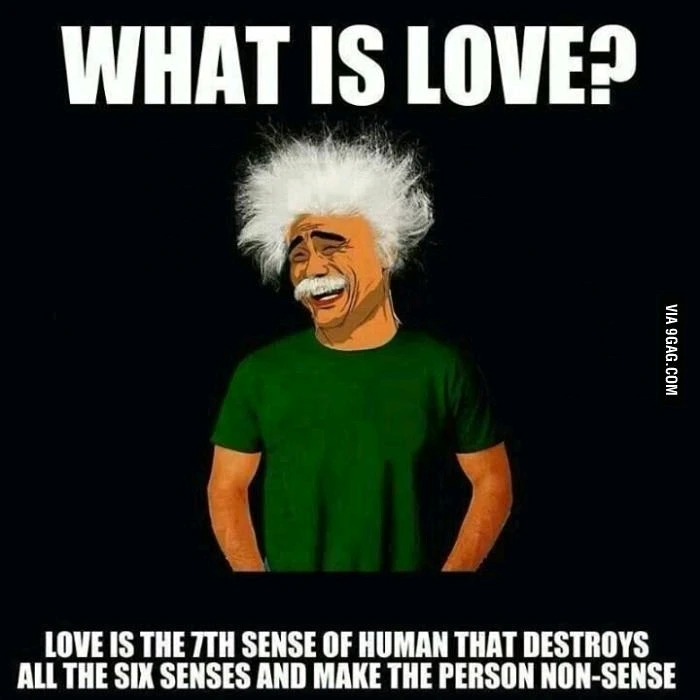
2y

2y
2y
baby don’t hurt me
2y
Baby don't hurt me (edited)

2y

2y

2y
I see I'm not the only one here who came to comment "baby don't hurt me, don't hurt me, no more."


2y
"What Is Love" What is love? Baby, don't hurt me Don't hurt me no more Baby, don't hurt me Don't hurt me no more What is love? Yeah, yeah (Ooh, ooh) I don't know why you're not there I give you my love, but you don't care So what is right? And what is wrong? Gimme a sign What is love? Baby, don't hurt me Don't hurt me no more What is love? Baby, don't hurt me Don't hurt me no more (Whoa, whoa, whoa, whoa, oh-whoa, whoa, ohh, ooh) (Whoa, whoa, whoa, whoa, oh-whoa, whoa, ohh, ooh) Oh, I don't know, what can I do? What else can I say, it's up to you I know we're one Just me and you I can't go on What is love? Baby, don't hurt me Don't hurt me no more What is love? Baby, don't hurt me Don't hurt me no more (Whoa, whoa, whoa, whoa, oh-whoa, whoa, ohh, ooh) (Whoa, whoa, whoa, whoa, oh-whoa, whoa, ohh, ooh) What is love? (Ooh, ooh, ooh) What is love? (Ooh, ooh, ooh) What is love? Baby, don't hurt me Don't hurt me no more Don't hurt me Don't hurt me I want no other, no other lover This is our life, our time When we are together, I need you forever Is it love? What is love? Baby, don't hurt me Don't hurt me no more What is love? Baby, don't hurt me Don't hurt me no more Yeah (Whoa, whoa, whoa, whoa, oh-whoa, whoa, ohh, ooh) (Whoa, whoa, whoa, whoa, oh-whoa, whoa, ohh, ooh) What is love? Baby, don't hurt me Don't hurt me no more What is love? Baby, don't hurt me Don't hurt me no more (Huh-huh, huh-huh) Baby, don't hurt me Don't hurt me no more (Huh-huh, huh-huh) Baby, don't hurt me Don't hurt me no more What is love?
2y
I asked chatGPT and this the answer Love, in its most intricate form, can be understood as a multifaceted phenomenon that intertwines biological, psychological, philosophical, and sociocultural dimensions, defying simplistic explanations. It encompasses both an evolutionary drive and a deeply subjective emotional experience, operating on several layers of human consciousness and social interaction. Biological Perspective From a biological standpoint, love is often linked to a complex interplay of neurochemicals like dopamine, oxytocin, and serotonin. These chemicals modulate feelings of pleasure, attachment, and bonding. Evolutionarily, love can be seen as a mechanism for species survival, promoting pair bonding, reproductive success, and caregiving. The limbic system, particularly the hypothalamus and amygdala, governs many of the emotional and physical responses associated with love, making it an instinctual, almost primal, human experience. Psychological Dimension Psychologically, love can be analyzed through frameworks like attachment theory (developed by John Bowlby and Mary Ainsworth), which explores how early relationships with caregivers shape our capacity to form healthy attachments in adulthood. Sigmund Freud linked love to the libido, a driving force behind not just sexual attraction but also creativity and social bonding. Carl Jung viewed love as a union of opposites, where the tension between different elements of the psyche (the conscious and the unconscious, the self and the other) is resolved in relationships. Moreover, love often involves a range of complex emotional states, from euphoria to jealousy, selflessness to possessiveness, joy to vulnerability. It can lead to emotional highs akin to addiction and lows that resemble psychological dependency or loss of identity. Philosophical Perspectives In philosophical terms, love has been the subject of debate for centuries. Plato, in his "Symposium," divided love into Eros (physical, passionate love), Philia (deep friendship or brotherly love), and Agape (selfless, unconditional love). Aristotle argued that true friendship (philia) is a form of love based on mutual virtue and goodness. For the existentialists, such as Jean-Paul Sartre, love becomes an arena where individuals confront their freedom, responsibilities, and the "otherness" of their partner. It can be both a source of existential fulfillment and conflict. Philosophers like Immanuel Kant emphasized the notion of love as a moral duty, suggesting that to love someone is to treat them as an end in themselves, not merely as a means to one's own happiness. Søren Kierkegaard, on the other hand, delved into the concept of divine love (agape), wherein self-sacrificing love leads one to the divine or transcendent experience of existence. Sociocultural Construction Sociologically, love is shaped by cultural norms, expectations, and rituals. Modern conceptions of romantic love—tied to monogamy, marriage, and personal fulfillment—are relatively recent constructs, particularly in the Western world. In many cultures, love is bound by traditions, social contracts, and communal expectations. The idea of love as an emotion that should lead to marriage is not universal; in some societies, marriages were (and sometimes still are) arranged for economic or political reasons, with love developing afterward. Moreover, the way love is expressed and understood is deeply contingent on gender roles, historical contexts, and media portrayals. The rise of modern digital technologies and dating apps has also redefined love and courtship, altering human interaction and the nature of emotional intimacy in unprecedented ways. Love and Paradoxes Love is also inherently paradoxical. It demands vulnerability yet offers security, requires individuality yet thrives on unity. It can be a source of great happiness but also of profound pain. Some theories suggest that love involves a constant tension between desire and fear of loss, between self-expansion and the surrender of the ego. Thus, love transcends mere emotion or biological drive; it is a dynamic and ever-evolving state of being, a negotiation between self and other, mind and body, reason and instinct, personal fulfillment and collective duty. The impossibility of fully capturing its essence is what makes love one of the most profound and enduring mysteries of human existence. Guess I will stay single.
2y
Love is an emotion.


2y
For me, love means giving someone else's name for the rest of my life, it's a decision, now I have to stay with him, no matter how much better option comes, I have to stay with him...actually main very old school. This is what is going on these days, casual relationships, hook up culture etc. I don't like it and I don't even have all this. I just want a person who will always be with me.. never give up on me or give up in our relationship. Try to do everything right, don't find excuses to destroy it, or trust me, stay loyal towards me, and share everything to make bond strong and for a strong understanding etc
2y
Love is respect and care, attachment of emotions with each other, understanding person's feelings through his/her expressions
2y
2y
Baby don't hurt me
2y
Baby don’t hurt me. Don’t hurt me. No more.
2y
Baby don’t hurt me!! No more!! 😂
2y
Oh, baby, don't hurt me Don't hurt me, no more Oh, baby, don't hurt me Don't hurt me, no more
2y
Baby don’t hurt me😁
2y
Baby don't hurt me, no more
2y
Baby don’t hurt me
Meet New People
50,000,000+
DOWNLOADS