ESFJ Comparison Chart: Navigating Social Harmony
The ESFJ, also known as the Ambassador, is a personality type that thrives in social settings, always eager to foster harmony and ensure everyone feels included. They are known for their warmth, practicality, and strong sense of duty. This page will explore how the ESFJ compares to other MBTI types, highlighting both similarities and differences to help you better understand this social butterfly. Whether you're an ESFJ looking to understand yourself better or someone trying to learn more about an ESFJ in your life, this page will provide valuable insights.

Understanding the ESFJ Comparison Chart
Our ESFJ comparison chart is a useful tool designed to help you see how the Ambassador measures up against other MBTI types. This chart breaks down the key similarities and differences, making it easier to understand the unique dynamics of each type pairing.
By clicking on a type in the comparison chart, you can delve deeper into how the ESFJ interacts with that specific type. This interactive feature is perfect for those who want to explore the nuances of each relationship in detail.

INTJ
Mastermind

INFJ
Guardian

ISTJ
Realist

ISFJ
Protector
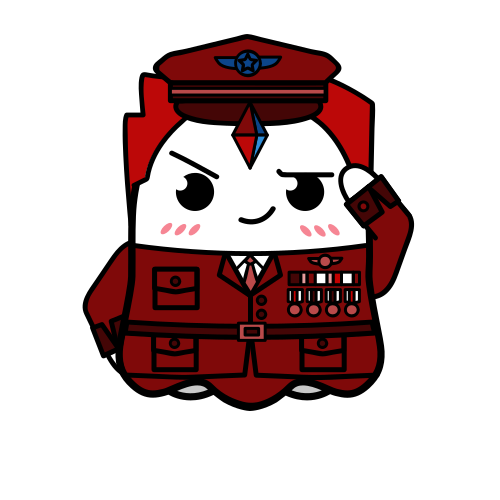
ESTJ
Executive

ESFP
Performer

ENFP
Crusader

INFP
Peacemaker

ENTJ
Commander

ENFJ
Hero

ISTP
Artisan

ESTP
Rebel

ENTP
Challenger

INTP
Genius

ISFP
Artist
ESFJ in Relationships: A Social Glue
In relationships, ESFJs are the glue that holds social circles together. They are nurturing, supportive, and always ready to lend a helping hand. Their strong sense of responsibility and commitment makes them reliable partners, friends, and family members.
ESFJs are also highly attuned to the emotional needs of others, often going out of their way to ensure everyone feels valued and appreciated. This sensitivity to others' feelings can sometimes lead to overextension, but their genuine care and concern make them beloved members of any community.
Similar Types: Overlapping Qualities
Some personality types share several traits with ESFJs, making them easy to confuse. These types often exhibit similar social behaviors and values, which can blur the lines between them. Let's explore these types in more detail.
ISFJ: Practical and Caring
ISFJs, like ESFJs, are nurturing and practical. Both types are deeply committed to their responsibilities and value tradition. They are often seen as the caregivers in their social circles, always ready to provide support and stability.
However, ISFJs are more introverted compared to the outgoing ESFJs. While both types are sensitive to the needs of others, ISFJs prefer smaller, more intimate settings, whereas ESFJs thrive in larger social gatherings.
ENFJ: Charismatic Leaders
ENFJs share the ESFJ's extroverted nature and their desire to help others. Both types are excellent at reading emotions and are driven by a strong sense of duty. They are natural leaders, often taking charge in social situations to ensure harmony and cooperation.
The key difference lies in their focus. While ESFJs are more concerned with immediate, practical matters, ENFJs are visionary, often thinking about the long-term impact of their actions. This makes ENFJs more future-oriented compared to the present-focused ESFJs.
Contrasting Types: Divergent Qualities
On the other end of the spectrum, some personality types are markedly different from ESFJs. These differences can be seen in their core values, behaviors, and ways of interacting with the world. Let's examine these contrasting types.
INTP: Analytical Thinkers
INTPs are almost the polar opposite of ESFJs. While ESFJs are driven by emotions and social harmony, INTPs are analytical and value logical reasoning above all. They are more interested in abstract concepts and theories, often losing themselves in thought.
Unlike the outgoing and people-oriented ESFJs, INTPs are introverted and prefer solitary activities. They are more focused on understanding the world through logic and reason, which can make them seem detached compared to the empathetic ESFJs.
ISTP: Independent and Practical
ISTPs are independent and highly practical, much like ESFJs. However, their approach to life is vastly different. While ESFJs are driven by their sense of duty to others, ISTPs are more focused on their own interests and personal freedom.
ISTPs are also more spontaneous and adaptable, often seeking new experiences and challenges. This contrasts with the structured and routine-oriented nature of ESFJs, who prefer stability and predictability in their lives.
Wrapping It Up: The ESFJ Spectrum
Understanding the ESFJ's place within the MBTI spectrum can provide valuable insights into their behavior and relationships. By comparing the Ambassador to similar and contrasting types, we can appreciate the unique qualities that make ESFJs who they are.
Whether you're an ESFJ or someone looking to understand them better, this page offers a comprehensive look at how this type interacts with the diverse personalities around them. Explore the comparison chart and dive deeper into the fascinating world of ESFJ compatibility.
MEET NEW PEOPLE
50,000,000+
DOWNLOADS
Universes
Personalities
Meet New People
50,000,000+
DOWNLOADS