INTJ Comparison Chart: Mastermind's Perfect Matches
INTJs, known as the Masterminds, are strategic thinkers who value intelligence, independence, and efficiency. Their analytical minds and visionary outlooks often set them apart from other personality types, making them uniquely suited for certain relationships while presenting challenges in others. This page will delve into the dynamic interplay between INTJs and various MBTI types, highlighting both similarities and differences to help you better understand these complex individuals. Whether you're an INTJ yourself or someone seeking to understand an INTJ better, this comprehensive guide will shed light on the nuances of their compatibility with other types.

Discover the INTJ Comparison Chart
Our interactive INTJ Comparison Chart is designed to provide an in-depth look at how INTJs compare to other MBTI types. This chart will help you identify the key traits that make INTJs unique and how these traits align or contrast with those of other personality types. By exploring these comparisons, you can gain valuable insights into the strengths and potential challenges of relationships involving INTJs.
Click on any MBTI type within the chart to learn more about how they compare with INTJs. This feature allows you to explore specific dynamics and better understand the intricacies of each relationship pairing.

INFJ
Guardian

ENFP
Crusader

ENTP
Challenger

INFP
Peacemaker

ISFP
Artist

ENFJ
Hero

ESFJ
Ambassador

INTP
Genius

ISTP
Artisan

ENTJ
Commander
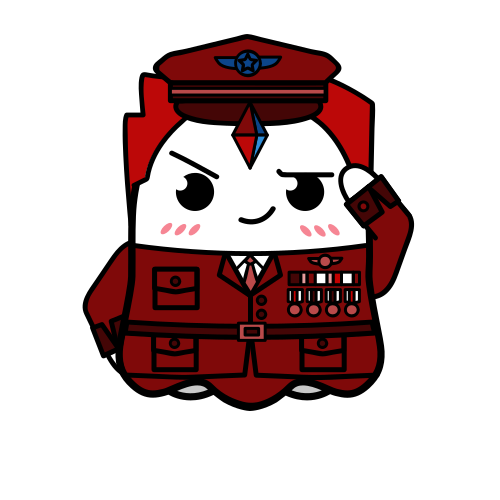
ESTJ
Executive

ISFJ
Protector

ISTJ
Realist

ESFP
Performer

ESTP
Rebel
INTJ in Relationships: Navigating the Mastermind's World
INTJs are known for their strong, independent nature and their preference for deep, meaningful connections. In relationships, they seek partners who can match their intellectual rigor and share their vision for the future. While INTJs may initially appear reserved or aloof, they are deeply loyal and committed once they find a partner who aligns with their values and goals.
Understanding an INTJ's approach to relationships can be challenging due to their complex personalities. They value honesty, direct communication, and mutual respect, often prioritizing these qualities over more superficial attributes. For those willing to invest the time and effort, relationships with INTJs can be incredibly rewarding and enriching.
Similar Types: Shared Qualities
Certain MBTI types share overlapping qualities with INTJs, making them easy to confuse at first glance. These types often exhibit similar traits such as strategic thinking, independence, and a preference for intellectual pursuits. Let's explore these personality types and what makes them similar to INTJs.
INTP: Analytical Minds
INTPs, like INTJs, are known for their analytical and logical approach to life. Both types value intelligence and have a natural curiosity that drives them to seek out new knowledge and understanding. They share a preference for solitude and deep thinking, often enjoying time spent alone to ponder complex ideas.
Despite these similarities, INTPs tend to be more flexible and open to new possibilities than INTJs, who prefer structured plans and clear goals. While both types are highly independent, INTPs may appear more laid-back, whereas INTJs are often more decisive and determined in their pursuits.
INFJ: Visionary Idealists
INFJs and INTJs both possess a strong sense of vision and purpose, often driven by a desire to make a meaningful impact on the world. They share a preference for deep, meaningful connections and a disdain for superficial interactions. Both types are strategic thinkers who value long-term planning and goal-setting.
However, INFJs are more focused on people and emotions, whereas INTJs prioritize logic and efficiency. While both types are introspective and value personal growth, INFJs are more likely to be guided by their values and ideals, whereas INTJs rely on rational analysis and objective reasoning.
ENTJ: Natural Leaders
ENTJs and INTJs are both known for their leadership abilities and strategic thinking. They share a preference for structure, organization, and efficiency, often excelling in roles that require planning and decision-making. Both types are highly goal-oriented and driven by a desire to achieve success.
The primary difference between these types lies in their approach to social interactions. ENTJs are more extroverted and enjoy engaging with others, whereas INTJs are more introverted and prefer solitary pursuits. Despite this difference, both types are highly independent and value competence and intelligence in themselves and others.
Contrasting Types: Major Differences
While some personality types share similarities with INTJs, others are fundamentally different. These contrasting types often have opposing values, preferences, and approaches to life, making them distinct from INTJs. Let's explore these personality types and what sets them apart.
ESFP: Spontaneous and Social
ESFPs are the polar opposite of INTJs in many ways. While INTJs are reserved and strategic, ESFPs are spontaneous and social, thriving on excitement and new experiences. They prefer to live in the moment and enjoy the present, often seeking out fun and adventure.
INTJs, on the other hand, are future-oriented and prefer to plan and strategize. They value efficiency and long-term goals, often finding the ESFP's carefree approach to life perplexing. Despite these differences, both types can learn from each other and find balance by embracing their contrasting perspectives.
ISFJ: Nurturing and Practical
ISFJs and INTJs differ significantly in their approach to life and relationships. ISFJs are nurturing and practical, often prioritizing the needs of others and seeking to create a harmonious environment. They value tradition, stability, and a sense of duty, often finding fulfillment in helping others.
INTJs, however, are more focused on their own goals and ambitions, often prioritizing efficiency and logic over emotional considerations. While ISFJs may find the INTJ's approach to life cold or detached, INTJs may view ISFJs as overly sentimental or resistant to change. Despite these differences, both types can complement each other by balancing practicality with strategic thinking.
ENFP: Enthusiastic and Imaginative
ENFPs are enthusiastic and imaginative, often driven by a desire to explore new ideas and possibilities. They are highly social and enjoy engaging with others, often seeking out meaningful connections and experiences. ENFPs value creativity and spontaneity, often finding joy in the unexpected.
INTJs, in contrast, prefer structure and predictability, often finding the ENFP's approach to life chaotic or unfocused. While ENFPs may view INTJs as rigid or overly serious, INTJs may see ENFPs as impractical or scattered. Despite these differences, both types can benefit from each other's strengths, finding balance between creativity and strategy.
Wrapping Up the Mastermind's Compatibility
Understanding the compatibility of INTJs with other personality types can provide valuable insights into their relationships and interactions. By exploring both similar and contrasting types, we can appreciate the unique qualities that make INTJs who they are and how they navigate the complexities of their connections with others. Whether you're an INTJ seeking to understand yourself better or someone looking to connect with an INTJ, this page offers a comprehensive guide to the dynamic interplay between the Mastermind and other MBTI types.
MEET NEW PEOPLE
50,000,000+
DOWNLOADS
Universes
Personalities
Meet New People
50,000,000+
DOWNLOADS