How INFJs Resolve Conflicts: Strategies and Challenges
Here lies the beginning of a profound journey into the inner world of the INFJ, the guardian of harmonious relations. As an INFJ or someone fortunate enough to share their universe, this exploration will unlock a deeper understanding of the intricate dance between diplomacy and deep convictions that marks the INFJ's approach to conflict resolution.

Why Do INFJs Avoid Conflict?
Our lives as INFJs are akin to sailing a placid sea beneath a moonlit sky, yearning for harmony and tranquility. Conflict, for us, is a storm that disturbs our serene journey. Our intuition (Ni) and extroverted feeling (Fe) become the lighthouse guiding us back to calm waters.
Picture a gathering of friends, clouded by the eruption of a disagreement. We, as INFJs, step in not as firefighters, but as mediators—gently dousing the fire, not extinguishing the passionate flame of their beliefs. We lean into our innate empathetic nature and deep understanding of emotions. We hear the unsaid words, see the hidden emotions, and gently guide our companions toward a middle ground, where no voice is drowned, no sentiment ignored.
An INFJ’s journey through conflict may appear calm, even passive, on the surface. But beneath this tranquility lies the strength of our convictions and principles, our introverted thinking (Ti), whispering that harmony doesn't necessitate silence. We know when to hold our tongue, but we also know when to let our voice echo amidst the storm. An INFJ engaged in conflict is akin to a poet mid-composition—carefully choosing their words, articulating their feelings without stepping on others’. Remember, we are guardians of peace, but not at the expense of our principles.
How Do INFJs Approach Conflict Resolution?
Although we are skilled at bringing peace to others, conflict takes its toll on us in ways few realize. INFJs are deeply affected by the energy around them, absorbing the unspoken emotions that linger beneath the surface. This makes us highly effective at understanding others, but it also means we carry the weight of emotional discord long after a conflict has passed.
When tension arises, our introverted intuition paints a picture of every possible outcome, while our extroverted feeling urges us to prioritize harmony. The result is often an internal struggle—one where we wrestle between speaking our truth and avoiding unnecessary confrontation. While we may sidestep minor disputes to maintain equilibrium, our introverted thinking reminds us that true harmony cannot exist without authenticity. We know when to keep the peace, but we also recognize that unresolved tensions, left unchecked, will only resurface in time.
Do INFJs Prefer Compromise in Conflicts?
An INFJ in conflict is like a translator between worlds, understanding both the emotional and logical layers at play. Our extroverted feeling allows us to step into another person’s experience, making sense of their emotions even when they struggle to articulate them. At the same time, introverted thinking helps us distill these emotions into clear, structured insights, allowing us to present solutions that honor both perspectives.
We do not take sides—we find the thread that weaves them together. In a heated discussion, we may appear calm, measured, even detached, but our mind is constantly working to untangle the deeper meaning beneath the disagreement. Every conflict, no matter how uncomfortable, holds the potential for resolution, and it is in these moments that the INFJ’s true strength emerges—not as a forceful presence, but as a quiet, steady guide toward understanding.
Understanding the INFJ Conflict Chart

INFJ
Guardian
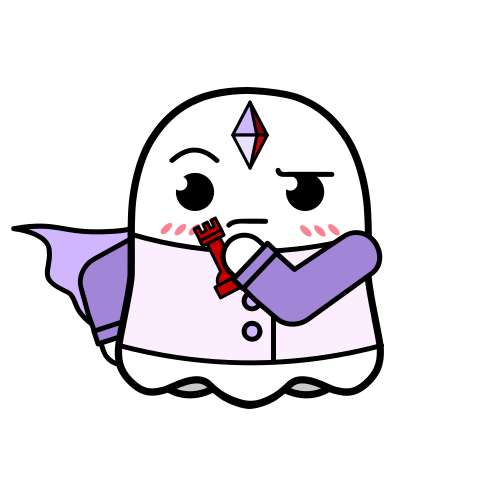
INTJ
Mastermind
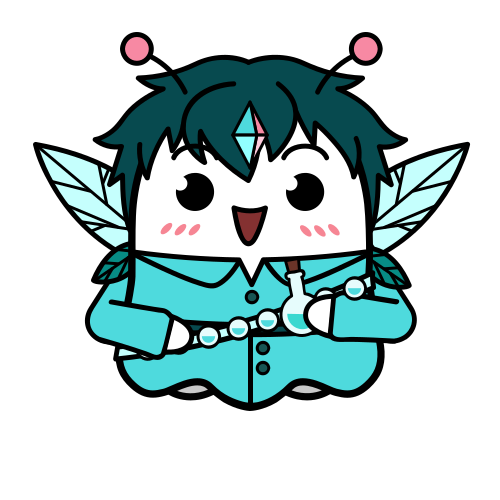
ENFP
Crusader
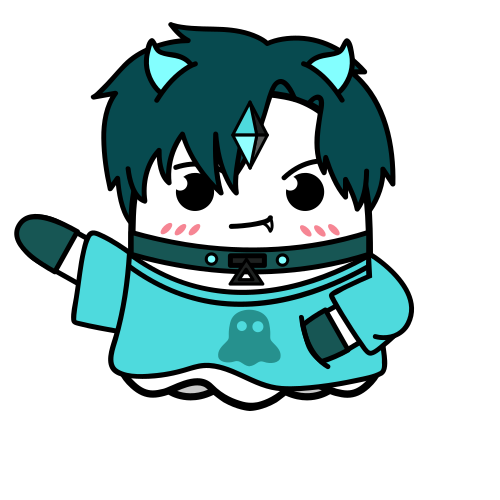
ENTP
Challenger

INFP
Peacemaker

ISFP
Artist

ENFJ
Hero

ESFJ
Ambassador

INTP
Genius

ISTP
Artisan

ENTJ
Commander
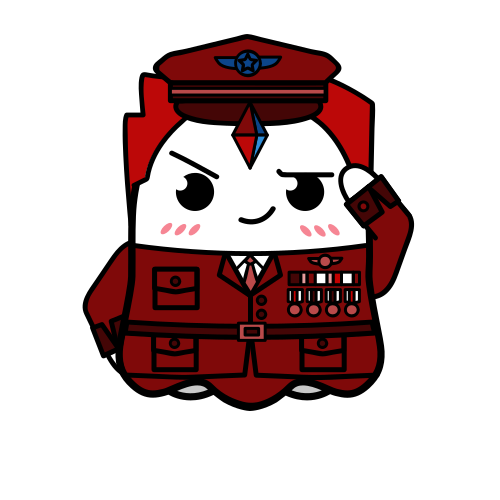
ESTJ
Executive

ISFJ
Protector

ISTJ
Realist
ESFP
Performer

ESTP
Rebel
Each conflict is a delicate interplay of perspectives, and for INFJs, understanding these nuances is the key to maintaining balance. The INFJ conflict chart serves as a guide, mapping out the rhythms of interaction with other MBTI types—some harmonious, others discordant, yet all holding the potential for growth and understanding.
Click through the chart to explore the different dynamics, unraveling the unique challenges and opportunities presented by each personality type. Knowledge of these patterns allows INFJs to navigate the intricacies of conflict with wisdom and grace, finding the hidden harmonies within even the most difficult interactions.
Challenges When INFJs Disagree with Other Types
Like a song composed in clashing keys, there are some personalities with whom the INFJ finds greater difficulty harmonizing. Understanding these contrasts allows us to approach conflict with patience, knowing that even discordant notes have a place in the grander symphony.
ESTJ: Resolving Conflict with Assertive Types
The ESTJ's direct, pragmatic rhythm can feel abrupt against the INFJ’s more nuanced and introspective style. Where we see emotions as integral to resolution, the ESTJ prioritizes action and efficiency, often viewing our careful deliberation as hesitation.
In conflict, they press forward with unwavering certainty, seeking a swift conclusion, while we take a step back, hoping to understand every angle before proceeding. This difference in tempo can create frustration—our quiet reflection mistaken for avoidance, their forcefulness perceived as insensitivity. Yet, beneath the contrast lies an opportunity: we can teach them the value of emotional consideration, while they help us embrace the strength of decisive action.
ENTP: Resolving Conflict with Argumentative Types
ENTPs enter conflict as a game of wit and intellect, delighting in the challenge of debate. Their words come swiftly, their thoughts weaving intricate arguments that can leave an INFJ struggling to find space for emotional nuance.
While they seek truth through relentless questioning, we seek meaning through understanding. This can leave us feeling drained, as the rapid exchange of ideas may feel less like a shared exploration and more like an assault on our deeply held values. To find harmony, we must anchor ourselves in our inner certainty while allowing them the freedom to explore ideas without mistaking their playfulness for dismissiveness. Likewise, they must learn that not all battles need to be won—sometimes, simply listening is the most profound victory of all.
ISTP: Resolving Conflict with Independent Types
ISTPs navigate the world with a self-reliant, logical detachment that can feel distant to the INFJ’s need for depth and connection. Where we yearn for shared emotional understanding, they prefer practicality, letting actions speak where words fail.
In conflict, this divide can lead to frustration. Our emotional insights may go unacknowledged, while their measured responses can leave us feeling unseen. Yet, there is a quiet beauty in their approach—one that teaches us the value of simplicity, of allowing emotions to exist without always needing to unravel them. If we can find balance, their steady presence can become a grounding force, just as our depth can offer them a richer perspective on the world.
Building Connection Through Conflict
For all the difficulties we face with certain types, there are others who move through life at a rhythm akin to our own, creating connections that feel effortless, as if we are two melodies blending into a single song.
ENFJ: Resolving Conflict with Supportive Types
With an ENFJ, the INFJ finds a kindred soul—someone who speaks the language of emotions with fluency and ease. Their warmth creates a safe space for our thoughts to unfurl, their presence a beacon that encourages us to step into the light rather than retreat into solitude.
In conflict, their proactive nature helps us voice our concerns without fear of dismissal. They listen, they validate, and they help bridge the gap between our inner world and the outside one. Together, we create a partnership where conflict becomes less about division and more about deepening our understanding of one another.
INFP: Resolving Conflict with Idealistic Types
There is something profoundly comforting about an INFP’s presence—like looking into a mirror that reflects our own longing for depth, authenticity, and meaning. Both of us move through life searching for something greater, our dreams woven with threads of introspection and idealism.
In moments of conflict, neither of us rushes to anger. Instead, we tread carefully, navigating the emotional currents with patience and reverence. While we may sometimes struggle with indecision, together, we learn that conflict is not something to fear but an opportunity to refine the harmony we share.
How INFJs Find Common Ground in Conflicts
The INFJ’s approach to conflict is not one of domination or retreat, but of orchestration—balancing perspectives, soothing discord, and ensuring that each voice finds its place in the greater harmony.
We do not seek conflict, nor do we shy away from it. Instead, we step into its depths with quiet resolve, knowing that even the most dissonant notes can, with care, be woven into something beautiful.
To those who navigate the world beside an INFJ, know this: we will listen when others will not, we will seek understanding where others seek victory, and in the face of discord, we will always strive to turn noise into music.
MEET NEW PEOPLE
50,000,000+
DOWNLOADS
Universes
Personalities
Meet New People
50,000,000+
DOWNLOADS