How INTJs Resolve Conflicts: Unveiling Problems and Offering Practical Solutions
Stepping onto the battlefield of conflict resolution, the INTJ stands armed with strategic precision and unflinching objectivity. Here, we'll dissect the intriguing mechanisms that drive INTJ conflict resolution, gifting you a strategic manual to navigate the intricate maze of disagreements and misunderstandings with the 'Mastermind'.

How INTJs Identify and Address Problems in Conflict
INTJs rarely stumble into conflict unprepared. Guided by Introverted Intuition (Ni) and Extroverted Thinking (Te), they anticipate problems before they arise, analyzing patterns and identifying weaknesses long before tension escalates. Where others may avoid conflict until it erupts, INTJs prefer to tackle issues at the first sign of inefficiency.
Imagine an INTJ leading a project team. They notice small inconsistencies in workflow that could lead to frustration down the line. Instead of waiting for emotions to flare, they call a meeting, lay out the data, and propose a streamlined solution before anyone else even recognizes the problem.
This approach isn’t about control—it’s about optimization. INTJs see conflict as an obstacle to progress, not a personal attack. If you’re in a relationship or work closely with an INTJ, understanding this can make disagreements feel less intimidating. Engage with them logically, focus on the core issue rather than emotions, and recognize that their goal is resolution, not contention.
How INTJs Find Practical Solutions to Conflicts
Despite their cool and detached exterior, INTJs aren’t indifferent to others—they just prioritize efficiency over emotional expression. Their natural instinct is to fix the issue, not dwell on feelings, which can sometimes make them seem distant in emotionally charged situations.
Picture an INTJ in a disagreement with their partner. Instead of engaging in an emotional back-and-forth, they stay calm, analyze the issue, and propose a rational compromise that benefits both parties. To the INTJ, this is a demonstration of care—resolving conflict with lasting solutions rather than temporary reassurance.
This method is rooted in their cognitive functions. Their Introverted Feeling (Fi), though less developed, ensures they uphold their internal values and remain fair in conflicts. Meanwhile, Extroverted Sensing (Se) helps them stay aware of the present situation, allowing them to make real-time adjustments when necessary.
For those in relationships with INTJs, it’s important to recognize that their quiet approach doesn’t mean they don’t care. They show concern through action, not sentiment. If emotional support is needed, be direct about it—while they may not always anticipate it, they will adjust when given clear expectations.
How INTJs Share Insights and Guide Others During Conflict
INTJs don’t just want to resolve conflict—they want to prevent it from happening again. They analyze mistakes, refine processes, and share insights to ensure long-term improvement. Their approach is not just about smoothing over issues but about strengthening the systems that led to them in the first place.
Consider an INTJ mentoring a struggling coworker. Rather than just offering quick fixes, they take the time to understand the person’s challenges, introduce efficiency strategies, and provide structured guidance. Their intervention not only resolves the immediate problem but equips the individual with skills to avoid similar issues in the future.
INTJs take this approach because of their Ni-Te combination. They see the big picture and are always thinking steps ahead. If you’re working with an INTJ, appreciate their long-term mindset. Their advice may seem blunt or impersonal, but it comes from a genuine desire to improve situations and help people grow.
Understanding the INTJ Conflict Chart

INFJ
Guardian
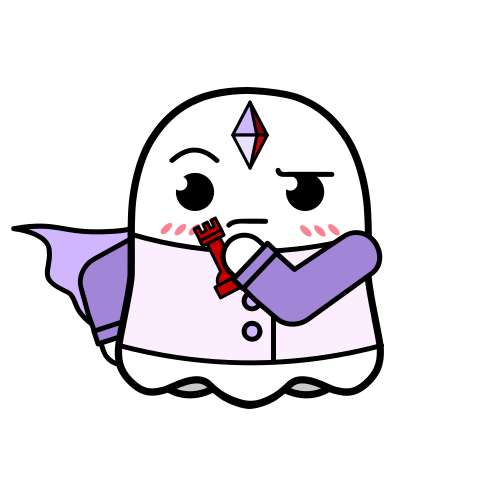
INTJ
Mastermind
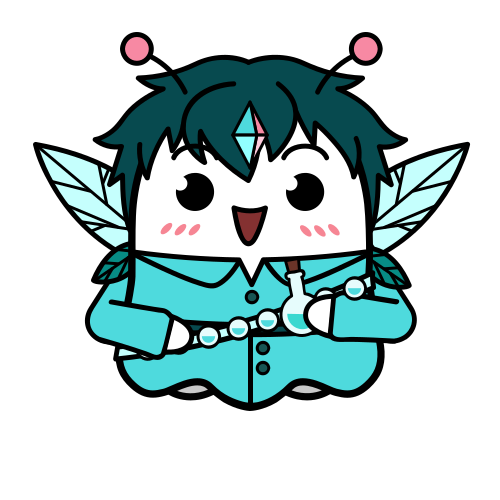
ENFP
Crusader
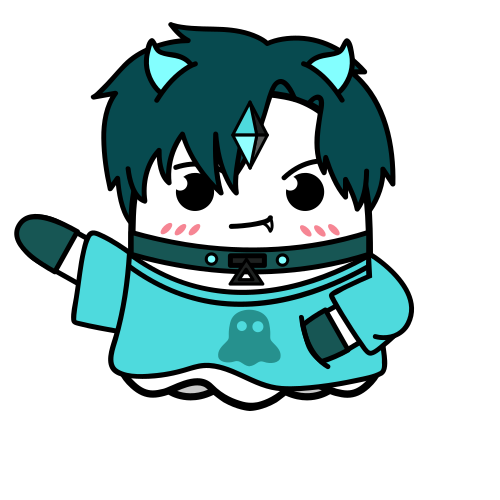
ENTP
Challenger
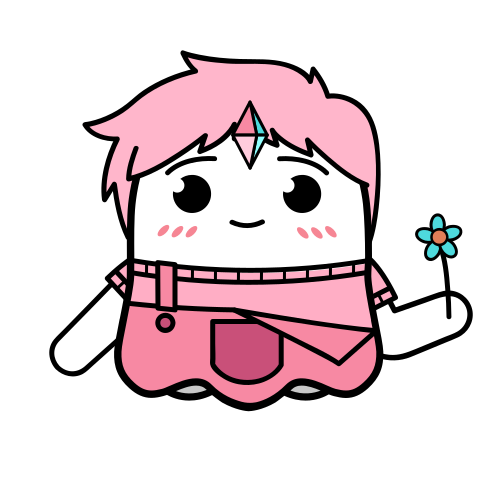
INFP
Peacemaker

ISFP
Artist

ENFJ
Hero

ESFJ
Ambassador

INTP
Genius

ISTP
Artisan

ENTJ
Commander
ESTJ
Executive

ISFJ
Protector

ISTJ
Realist
ESFP
Performer
ESTP
Rebel
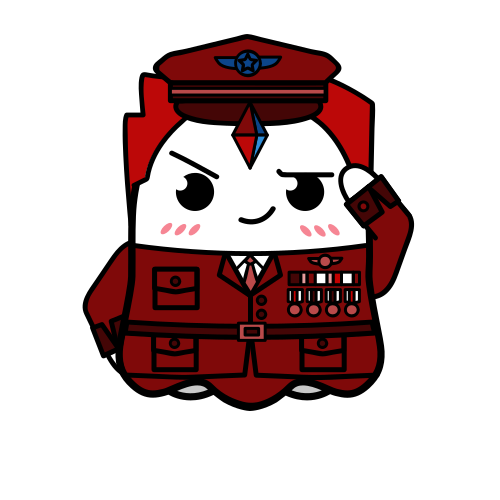
Conflict plays out differently depending on the personalities involved. The INTJ conflict chart breaks down how INTJs interact with different MBTI types, revealing points of friction and opportunities for resolution.
Click through to explore how INTJs navigate conflict with different personalities, from those who challenge their structured approach to those who complement their problem-solving mindset. Understanding these dynamics can foster more effective communication and smoother resolutions.
Personality Types INTJs Struggle with in Conflict
While INTJs approach conflict with logic and strategy, some personality types prioritize emotions, spontaneity, or social harmony in ways that can create tension.
ENFP: Resolving Conflict with Emotional Types
ENFPs and INTJs often find themselves at odds due to their differing approaches to conflict. ENFPs prioritize emotional expression and interpersonal connection, while INTJs focus on efficiency and problem-solving.
When tensions arise, ENFPs may feel dismissed if the INTJ doesn’t acknowledge their emotions, while INTJs may become frustrated by what they see as an overly emotional reaction to a solvable issue. The key to resolution is balance—ENFPs can benefit from recognizing that INTJs express care through action, while INTJs can make an effort to validate ENFPs’ feelings even when they don’t relate to them directly.
ESFJ: Resolving Conflict with Social Types
ESFJs thrive on emotional connection and group cohesion, which can clash with the INTJ’s preference for independence and direct communication. While ESFJs want to discuss feelings and ensure everyone is comfortable, INTJs see conflict as a problem to be solved, not an emotional event to process.
This difference can lead to misunderstandings—ESFJs may perceive INTJs as cold, while INTJs may find ESFJs overly concerned with social dynamics. To find common ground, ESFJs can focus on articulating their needs in a structured way, while INTJs can recognize that some conflicts require emotional as well as logical resolution.
INFP: Resolving Conflict with Idealistic Types
INFPs approach conflict through introspection and emotion, which contrasts with the INTJ’s pragmatic mindset. INFPs often seek deep emotional understanding, while INTJs prefer practical solutions.
When disagreements arise, INFPs may feel unheard if the INTJ focuses solely on problem-solving, while INTJs may grow impatient with what they see as avoidance of logical discussion. To bridge this gap, INTJs can practice patience in emotional conversations, and INFPs can make an effort to communicate their needs in a structured way.
Personality Types INTJs Work Well with in Conflict
Despite occasional friction with certain types, INTJs naturally connect with personalities that value strategy, independence, and depth of thought.
ENTJ: Resolving Conflict with Strategic Types
ENTJs and INTJs often form strong, goal-oriented partnerships. Both are driven, logical, and focused on efficiency, allowing them to tackle conflicts with mutual respect.
In disagreements, neither takes things personally, making resolution straightforward. Their shared emphasis on strategy and results allows them to engage in productive debates without emotional turbulence, leading to effective solutions and strengthened collaboration.
INFJ: Resolving Conflict with Insightful Types
INFJs and INTJs share a love for depth, analysis, and long-term thinking. While INTJs approach conflict with logic, INFJs bring emotional intelligence to the table, creating a well-balanced dynamic.
INFJs help INTJs see the human side of conflict, while INTJs provide structure and clarity in moments of uncertainty. Their combined strengths make for thoughtful, effective conflict resolution that accounts for both logic and emotional nuance.
How INTJs Resolve Conflicts Effectively
Conflict, to an INTJ, is not a battle of emotions but an equation to be solved. They approach disagreements with logic, strategy, and an unwavering focus on improvement. While their method may seem detached, it is ultimately rooted in a desire for clarity, efficiency, and long-term growth.
For those who interact with INTJs, understanding their perspective can make conflict easier to navigate. Approach them with reason, avoid unnecessary emotional escalation, and recognize that their solutions are their way of showing they care.
For INTJs themselves, growth lies in recognizing that not all conflicts can be solved with logic alone. Emotional validation, even when it feels inefficient, can be a crucial part of resolution. Learning to balance their analytical mindset with an awareness of interpersonal dynamics allows them to not only solve problems but strengthen relationships in the process.
At the core of it all, INTJs don’t seek conflict—but when it arises, they engage with the same precision and foresight they bring to every other challenge in life. And in doing so, they turn disagreements into opportunities for progress, insight, and mastery.
MEET NEW PEOPLE
50,000,000+
DOWNLOADS
Universes
Personalities
Meet New People
50,000,000+
DOWNLOADS