How ISFPs Resolve Conflicts: Embracing Peace While Standing Firm in Conviction
In the canvas of life, conflicts are like contrasting colors—at first jarring, but ultimately adding depth and dimension. For us, the Artists, conflict is not something to be feared or avoided but understood and transformed. We meet discord with quiet strength, blending empathy and conviction to create resolution as naturally as a painter blends hues on a canvas.

How ISFPs Seek Peace During Conflict
Like a river that bends but never breaks, we move through conflict with grace, seeking to maintain harmony without compromising our core values. We do not engage in battle for the sake of winning, nor do we force our perspective upon others. Instead, we listen, absorb, and respond with deep understanding.
At the heart of this approach is our dominant function, Introverted Feeling (Fi). This internal compass guides us in all things, helping us weigh every action against our personal values. We are deeply in tune with what feels right and authentic, and because of this, we instinctively strive to create an environment of understanding and mutual respect.
Imagine a gathering where tensions rise—two friends locked in a heated argument, voices sharp, emotions raw. Where others may try to overpower or silence, we step in as the quiet mediators. With a soft yet steady voice, we validate both perspectives, not to manipulate but to remind each person that their emotions are seen and understood. We do not force peace, but we invite it.
This ability extends to every aspect of our lives. In relationships, we choose connection over control. In friendships, we diffuse tension with kindness rather than confrontation. At work, we bring a sense of calm, fostering an environment where creativity and collaboration thrive. To know an ISFP is to know someone who values harmony not as a fragile balance, but as an ever-evolving dance between authenticity and compassion.
How ISFPs Stay True to Their Convictions in Conflict
Our desire for peace should never be mistaken for passivity. While we do not seek out conflict, we will not back down when something truly matters. Our convictions are not loud, but they are unshakable—rooted deep within us, as much a part of who we are as the art we create or the passions we pursue.
This quiet strength comes from our auxiliary function, Extroverted Sensing (Se). It sharpens our awareness, allowing us to sense the energy of a room, the shift in someone’s expression, the hidden tensions beneath the surface. It also gives us the ability to act decisively when needed.
Picture a moment when an ISFP’s values are challenged—perhaps someone speaks dismissively about something they hold dear, or a choice is questioned that comes from the very essence of who they are. We will not lash out or engage in unnecessary debate, but we will stand our ground. With measured words and unwavering presence, we will make it clear that our perspective is not up for negotiation.
This quiet conviction shows up in every part of our lives. In love, we are fiercely loyal, unwilling to compromise what we know to be true. In our creative pursuits, we express our emotions boldly, using art, music, or movement to communicate what words often cannot. And in our careers, we are the ones who advocate for integrity, ensuring that authenticity is never sacrificed for the sake of convenience.
For those who know us, it is essential to understand this duality—our softness does not mean we are easily swayed, and our patience does not mean we will accept being overlooked. We may not demand attention, but when we speak from our hearts, our words carry the weight of genuine conviction.
How ISFPs Balance Space and Expression in Conflict
Conflict resolution is not only about what is said but also about what is left unsaid. ISFPs walk a fine line between giving others space to express themselves and ensuring that our own thoughts are heard.
Because we process emotions internally, we may withdraw when tensions rise, choosing solitude over confrontation. This does not mean we are indifferent; rather, it is how we find clarity before re-engaging. However, if we retreat for too long, our voices risk being lost altogether.
This is why it is essential for those around us to encourage—not force—open dialogue. A patient and non-judgmental approach gives us the confidence to share what is on our minds. And in return, we offer our full presence, our undivided attention, and our ability to see beyond the surface of the issue at hand.
For an ISFP, conflict is never about proving a point—it is about preserving authenticity, deepening connections, and ensuring that every resolution reflects the truth of who we are.
Understanding the ISFP Conflict Chart

INFJ
Guardian

INTJ
Mastermind

ENFP
Crusader

ENTP
Challenger

INFP
Peacemaker

ISFP
Artist

ENFJ
Hero

ESFJ
Ambassador

INTP
Genius

ISTP
Artisan

ENTJ
Commander
ESTJ
Executive

ISFJ
Protector

ISTJ
Realist

ESFP
Performer

ESTP
Rebel
Conflict is an inevitable part of life, but how we navigate it varies from person to person. The ISFP conflict chart provides insight into the unique ways we interact with different personality types, where tensions may arise, and how we can find common ground.
Click on any personality type in the chart to explore the dynamics of conflict between ISFPs and others. Whether it is a clash of perspectives or a natural alignment, understanding these differences can lead to deeper, more meaningful connections.
Types ISFPs Struggle with in Conflict
Despite our adaptability, there are certain personalities that naturally create tension with our approach to conflict. These differences are not insurmountable, but they require effort and understanding from both sides.
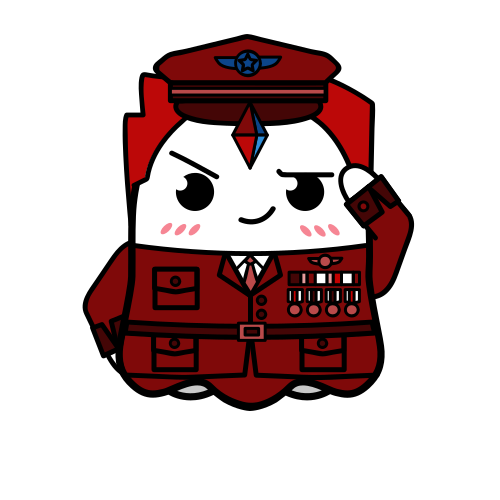
ESTJ: Resolving Conflict with Structured Types
ESTJs thrive on order, efficiency, and clear-cut rules, while we live by intuition, emotion, and the beauty of the unexpected. Where they want structured solutions, we trust in the organic unfolding of events. This difference can lead to frustration, as they may see us as impractical, and we may see them as rigid.
The key to resolving conflicts with an ESTJ is recognizing that their need for structure comes from a desire for stability, not control. If they can allow space for flexibility, and we can offer practical considerations for our choices, compromise is possible.
INTJ: Resolving Conflict with Logical Types
INTJs approach the world through a calculated, strategic lens, often prioritizing efficiency over emotional nuance. We, on the other hand, navigate life by how things feel. When conflict arises, their tendency to analyze rather than empathize can make us feel misunderstood, while our emphasis on emotion may seem irrational to them.
Bridging this gap requires both of us to meet in the middle—INTJs can practice active listening, recognizing that emotions hold weight, while we can articulate our perspectives in a way that appeals to their logical framework.
ENFJ: Resolving Conflict with Optimistic Types
While ENFJs and ISFPs share a deep appreciation for human connection, their energetic and outward-focused approach can sometimes feel overwhelming to us. They want to talk through every emotion, every detail, while we prefer quiet reflection. Their enthusiasm for group harmony can feel like pressure, making us retreat further.
The best way to resolve conflict with an ENFJ is to set clear boundaries while reassuring them that we care. If they can respect our need for space, and we can make an effort to share our feelings openly, the relationship can flourish.
Types ISFPs Connect Well with in Conflict
While some personalities challenge us, others naturally align with our way of being. These connections feel effortless, like the flow of paint across a canvas.
INFP: Resolving Conflict with Like-Minded Types
INFPs and ISFPs are both deeply emotional and introspective, valuing authenticity above all else. Neither forces the other to be something they’re not, and conflicts between them are often resolved with gentle conversation and mutual respect.
In disagreements, both are willing to listen, reflect, and seek understanding rather than dominance. This makes for a bond built on trust, where differences are celebrated rather than feared.
ESFP: Resolving Conflict with Energetic Types
ESFPs and ISFPs share a love for living in the moment. Both are deeply attuned to the beauty of the world, and when conflicts arise, they are often short-lived, quickly replaced by laughter and lightheartedness.
With ESFPs, resolution comes naturally because neither holds onto negativity for long. Their shared spontaneity makes problem-solving feel more like an adventure than a battle.
How ISFPs Find Harmony in Conflict
Like the colors in a painting, conflict does not exist to create chaos but to add dimension to our lives. For us, resolution is not about winning or losing—it is about understanding, about bringing clarity where there was once discord, about ensuring that every voice is heard without losing ourselves in the process.
If you are an ISFP, know that your empathy is a gift, but so is your strength. And if you are walking beside one, remember that we may not always speak the loudest, but when we do, our words come from a place of deep truth.
In all things, we seek balance, beauty, and authenticity. Conflict is no different—it, too, is a brushstroke in the masterpiece of life.
MEET NEW PEOPLE
50,000,000+
DOWNLOADS
Universes
Personalities
Meet New People
50,000,000+
DOWNLOADS